ポスター誕生の裏話 / Planting the Poster
English Translation Available Below
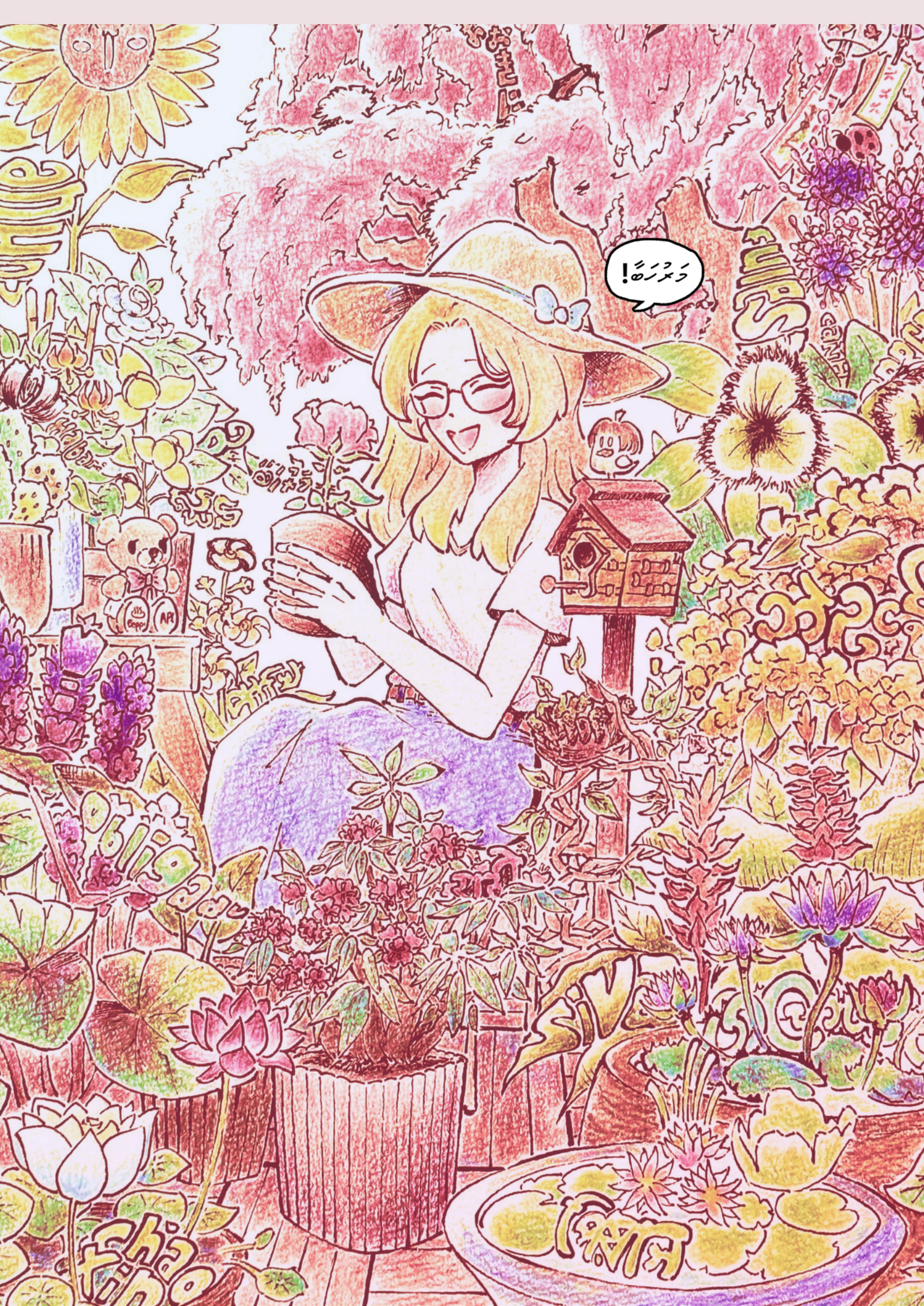
言の葉のテラリウム - Aina
PRチームが、「Language Festival 6」のポスターの作成を任されたとき、これは自分のアートスキルを少しだけ披露し、APUで日々こなす執筆や読解の課題から少し息抜きをする絶好の機会だと思いました。制作にあたり、国際的なイベントのポスターによく使われる「ランドマークのある地球」や「異なる言語を話す吹き出し付きの人物」といった要素をできるだけ避けて、自分自身にあえて挑戦を課して、もっとユニークなものを作ろうと考えましたそこで、
「人間以外で、他に何が多様性を持っているだろう?」「 どうアプローチすればいいだろうか?」と考えている中で、「植物」を取り入れる案を思いつきました。植物は多様性に富んでおり、色も種も多種多様で、中には世界の特定の地域でしか育たないものさえあります。言うまでもなく、植物は生物学的に生きている存在であり、あらゆる社会と何らかの形で関わってきました。まさに文化的多様性を象徴する完璧なモチーフだったのです!
当初のコンセプトは単に「花畑に横たわる人」というものでしたが、それだとイラストに使える植物の種類が花だけに厳しく限定されてしまうと共に、植物よりも人に注目が集まりすぎてしまうと考えました。ある日、Pinterestを閲覧していたときに、植物園というコンセプトを取り入れてみようと思いついたのです。それはまさに、完璧な次のステップでした。植物園なら、植物の選択肢が増えるだけでなく、「共生」というテーマをよりよく象徴し、植物と人物の間の相互作用もより豊かに表現できるため、両者に均等に焦点が当たるようになります。
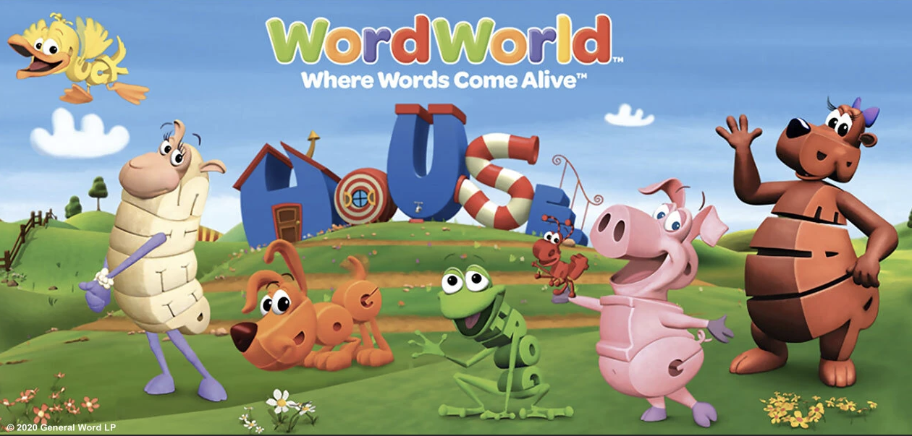
Word World by The Learning Box and WTTW National via [https://the-new-macys-parade.fandom.com/wiki/Word_World]
これらの表現は、イベントのコンセプトと見事に調和しました。少女は「学生」、あるいは参加を決意した「全ての存在」を表し、植物は、その学生がAPUで交流できる「多種多様な人々や文化」を象徴しています。また、イベント名が「ことばのおまつり」であることから、植物の一部に、取り上げられた言語の単語を少し加えるというタイポグラフィーを盛り込みました。これは、私たちが言語という側面に重点を置いていることを示しています。また、少女の隣にある小さな吹き出しは、彼女が単に観察しているだけでなく、これらの文化に積極的に関わり、交流していることを示しています。(正直に言うと、最初はピンクのバラに書かれたディベヒ語の文字が小さすぎると感じたのが主な理由でしたが!)
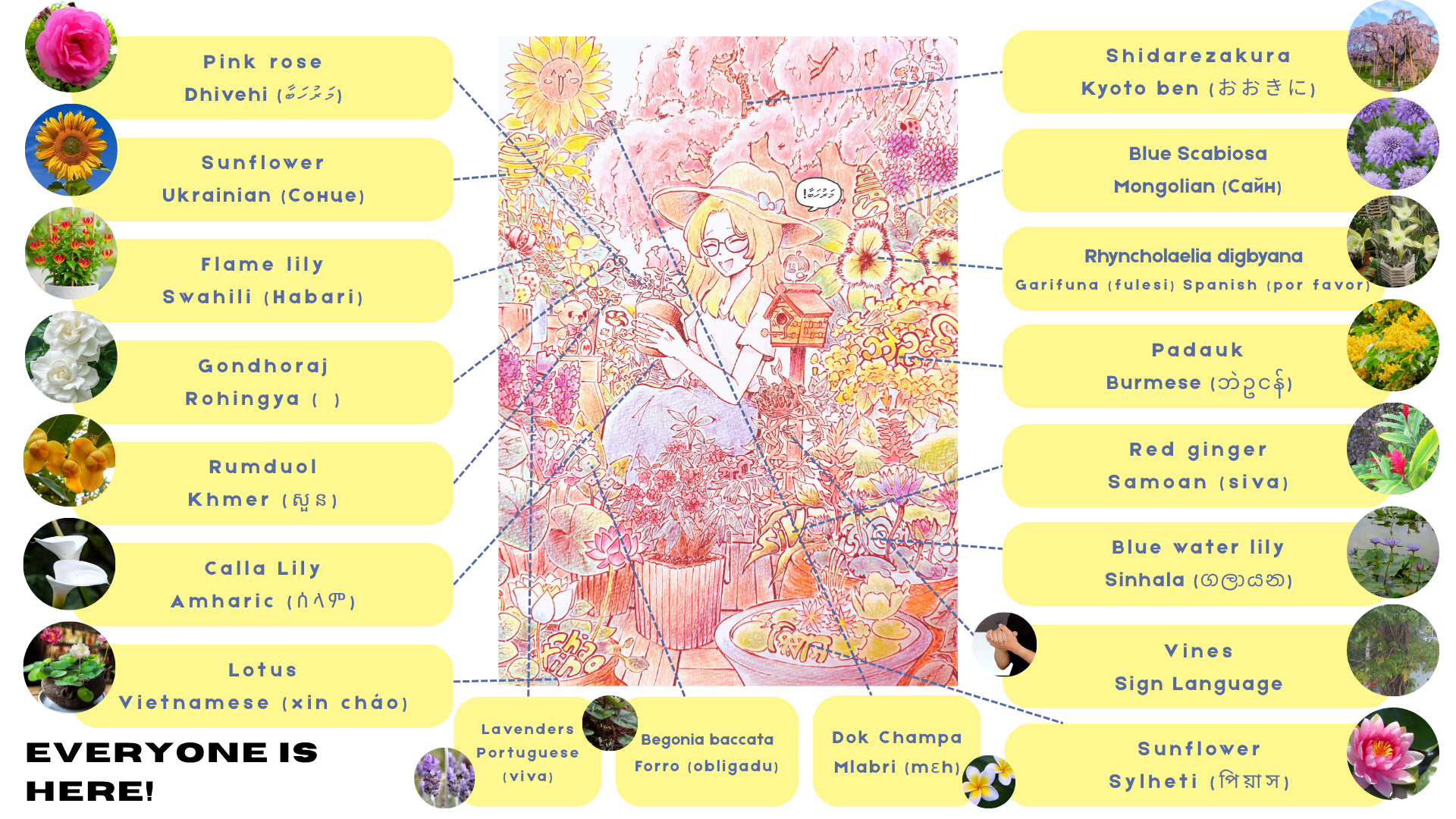
「Language Festival 2026」で紹介される言葉と言語
ディベヒ語といえば、これらの言語が生まれた地域を象徴する植物を調査して選ぶのにかなりの時間がかかりました。もっと良い選択肢もあったかもしれませんが、私が選んだ植物にはかなり満足しています。本音を言えば、このポスター制作で最も難しかったのは、適切な言葉を選び、実際にそれを描き込むことでした。非常に多くの異なる文字体系があり、それぞれの書き方が言語によって異なるのです。さらに、それらの言葉を植物の一部として配置しつつ、ある程度読み取れるように微調整する必要もありました。
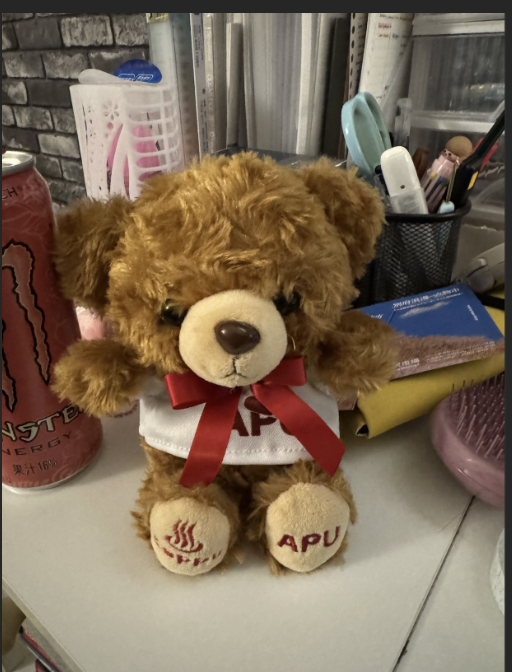
APUの愛称マスコット「パディントン」
他にも、詳細についてもお話ししようと思います。その一つが、女の子の隣でのんびりと座っている小さな鳥で、「一人で世界を知る必要はない」というメッセージを伝えています。それから、APUの「マスコット」とも言えるテディベアも描きました。これはランゲージフェスティバルがAPU主催のイベントであることを示すためのものです。そして、ひまわりとその笑顔。これには特に意味はありませんが、子供の絵のようでただかわいいと思っただけです。
最後に、タイトルについてお話ししたいと思います。『A Terrarium of Words』。はい、これは確かに新海誠監督の『言の葉の庭』へのオマージュですので、「garden」という言葉は使えませんでした。では、なぜ「greenhouse」ではなく「terrarium」にしたのでしょうか?まず第一に、『A Greenhouse of Words』というタイトルは、ちょっと不格好に聞こえるからです。テラリウムとは、基本的に屋内に置く小型の温室のようなもので、水槽のようなものですが、植物や時には昆虫を育てるためのものです。「テラリウム」という響きの方が可愛らしくて優雅に感じられ、あの『Tiny Little Adiantum』という曲や、ディズニーパークにある「イッツ・ア・スモール・ワールド」のアトラクションを思い出させます。
Planting the Poster
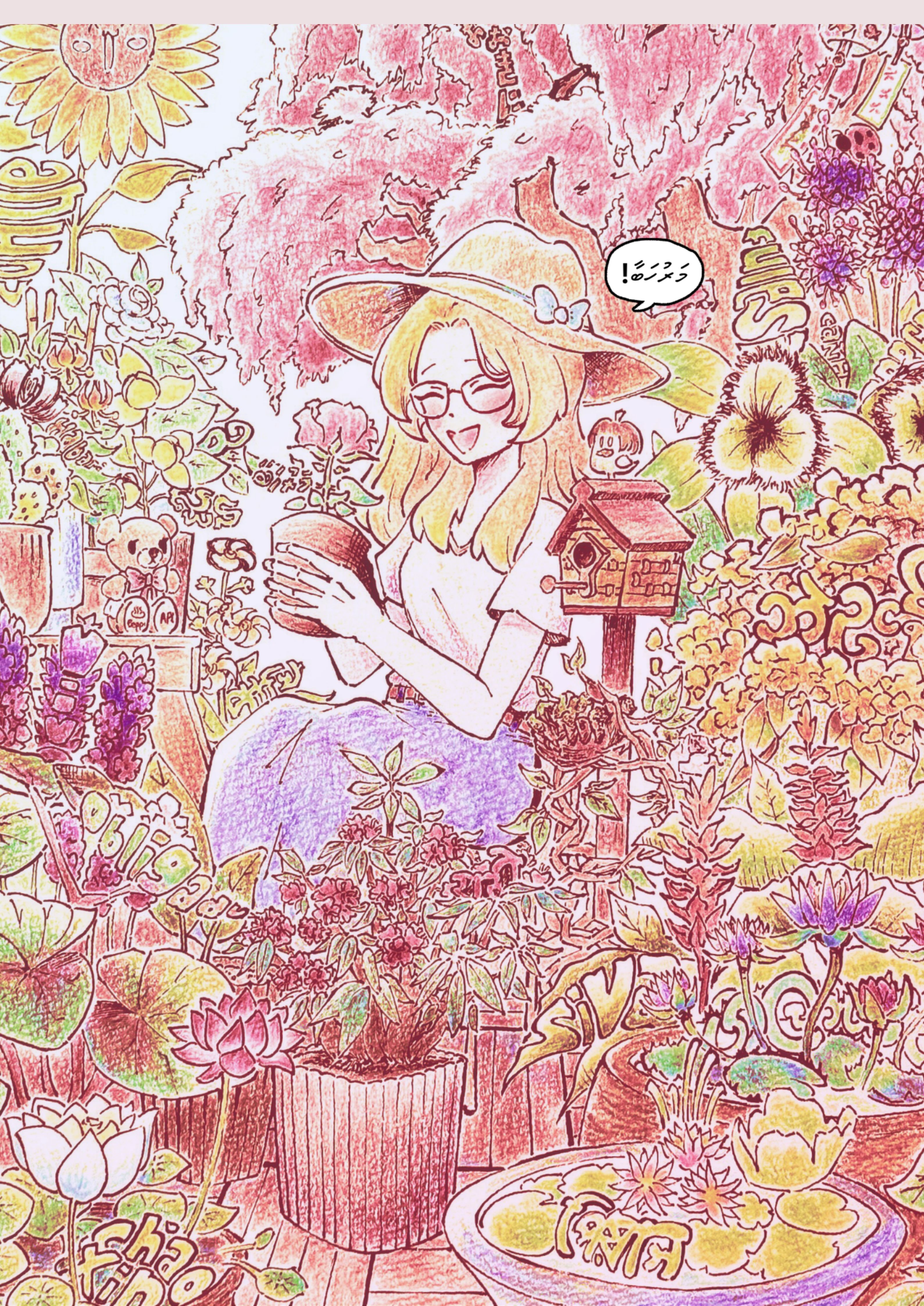
A Terrarium of Words
When the PR team was tasked with creating a poster to serve as a guide for what kind of vibe we want Language Festival 6 to have, I thought this was a great opportunity to show a little bit of my artistic skills and take a little break from all the writing and reading assignments we all do in APU. In the creation of the poster, I thought it would be interesting to also challenge myself by avoiding as much “earth with landmarks” or “people with speech bubbles speaking different languages” elements as possible, as I feel like those have been done so many times to represent international events. I wanted something more unique.
Then I thought to myself, “outside of humans, what else is diverse? How should I approach this?”. That’s when I thought, why not use plants? Plants are diverse, there’s many different colors, many different species, and some even grow only in certain parts of the world. Not to mention plants are biologically alive and have been related to all societies in certain ways or another, they were the perfect metaphor to cultural diversity!
Initially, the concept was just “person lying in a field of flowers”, but that severely limited the options of what type of plants I can use for the illustration to just flowers, plus I thought that approach would put too much attention on the person as opposed to the plants. It was only until one day I was browsing Pinterest and thought of using the concept of a greenhouse. It was the perfect next step, really. A greenhouse not only increases the number of options for plants, is a better metaphor for “coexistence”, and gives way for more interactions between the plants and the person, that way both get an equal amount of focus.
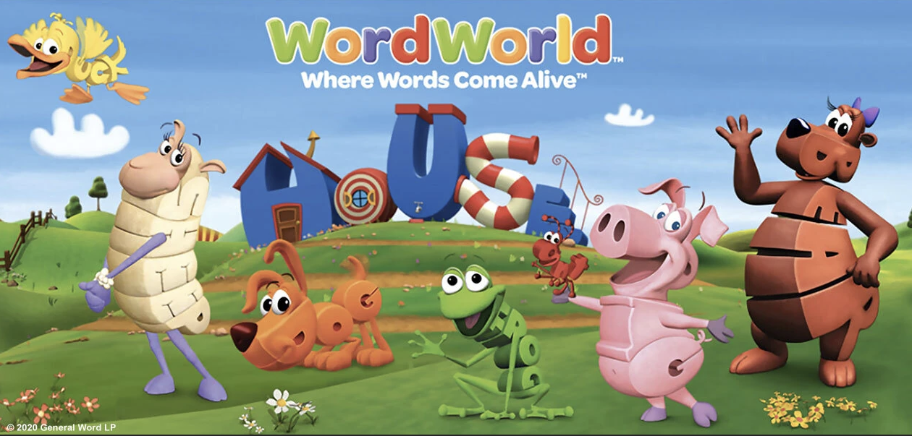
Word World, the inspiration for the typography concept [Word World] by [The Learning Box and WTTW National] via [https://the-new-macys-parade.fandom.com/wiki/Word_World]
The metaphors ended up aligning with the event’s concept seamlessly. The girl is the “student” or just anyone who decides to participate and the plants are the “many different peoples and cultures” said student can interact with in APU. And because the event is called “language festival”, I added a bit of typography, just some words from the languages featured in some parts of the plant (I got this idea from this show I used to watch called Word World, by the way), as a way of saying “yes, this is a cultural event, but we’re focusing more on the language aspect of things”. And the little text bubble next to the girl is there to show that she’s not just there to observe, but to actively engage and interact with these cultures (although to be honest at first it was more because I thought the text for Dhivehi on the pink rose was too small).
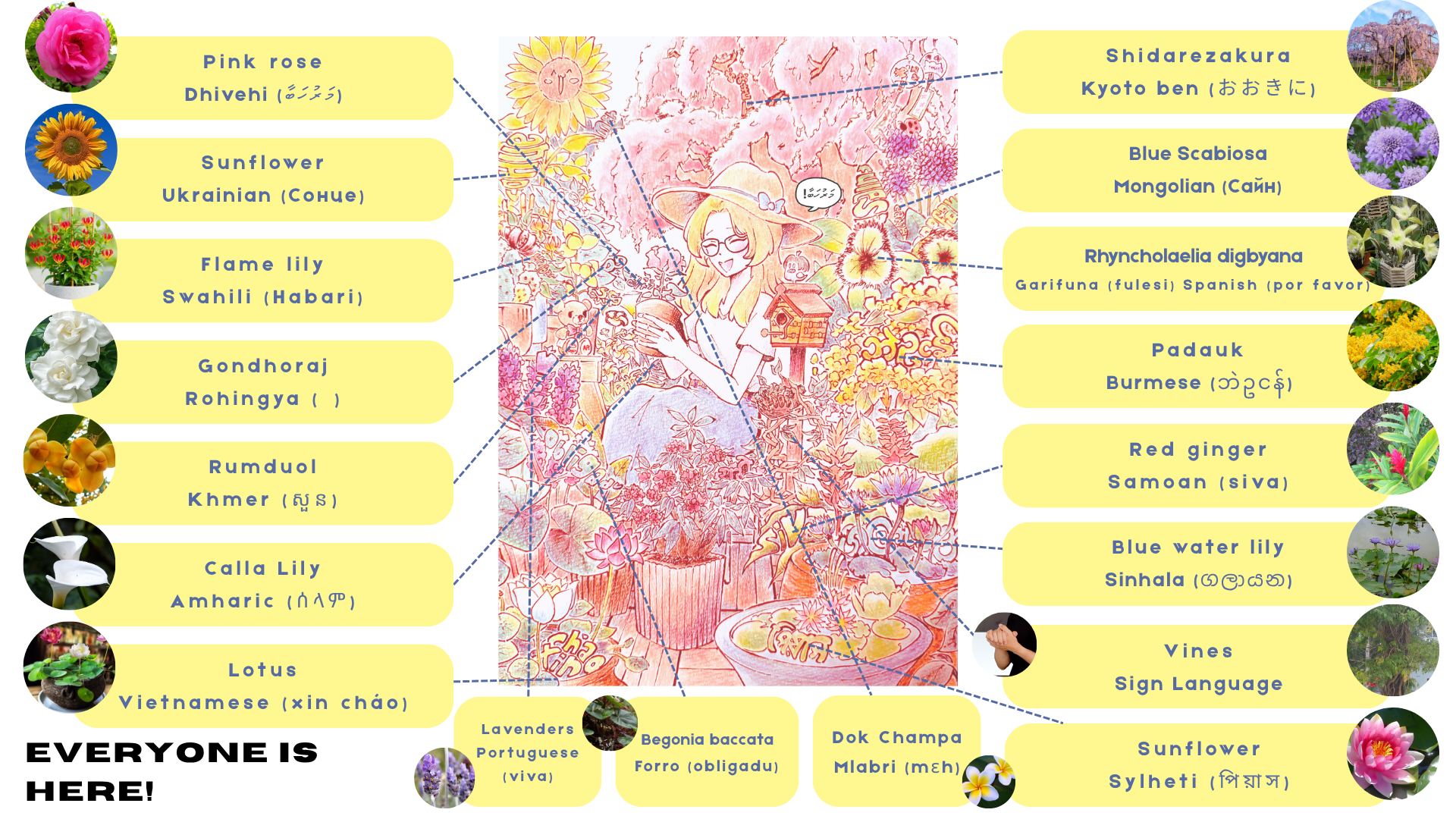
「Language Festival 2026」で紹介される言葉と言語
Speaking of Dhivehi, it took quite some time to research and pick which plant best represents the regions these languages came from, and while some choices maybe could’ve served as better representatives, I am quite happy with the ones I chose. To be completely honest, the most challenging part about the making of this poster would be picking the right words to put on the plants and actually drawing them in. There were so many different scripts and the systems of writing it as is alone is all not the same, so imagine that, but also tweaking these words into parts of the plants in a way that is still somewhat legible to the speakers of these languages.
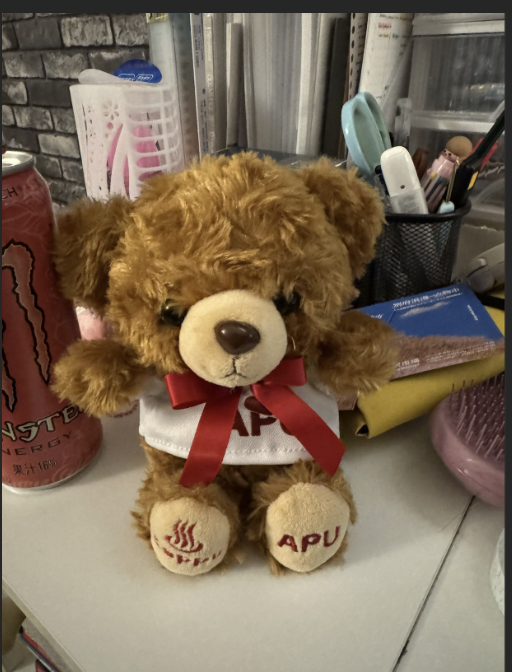
Paddington the APU pseudo-mascot Photo taken by Aina
There’re also some extra, minor details I can talk about. One of which being the little bird just there chilling, to say “you don’t have to learn the world alone”. There’s the teddy bear too, a pseudo-mascot for APU, now available in the APU COOP (I named mine Paddington), as a way of showing that this is an APU-based event, should the poster have to present itself on its own. And then the sunflower and his goofy smile. It doesn’t really mean anything, I just thought it was cute. Plus, sometimes in children’s drawings you would see a sun in the top corner of the paper with a face, and since it’s a “sun” flower.
Finally, I would like to talk about the title. A Terrarium of Words. Yes, it is indeed a reference to Makoto Shinkai’s The Garden of Words, therefore I couldn’t really use the word “garden”. But why “terrarium” and not something like “greenhouse”? Firstly, I just think A Greenhouse of Words sounds a little clunky. A terrarium is basically a smaller greenhouse that people typically put indoors, like an aquarium but for plants and sometimes bugs. I thought “terrarium” sounds cuter and more elegant, reminds me of that song called Tiny Little Adiantum and those “it’s a small world after all” rides at Disney parks.