Entrance Ceremony Fall 2026
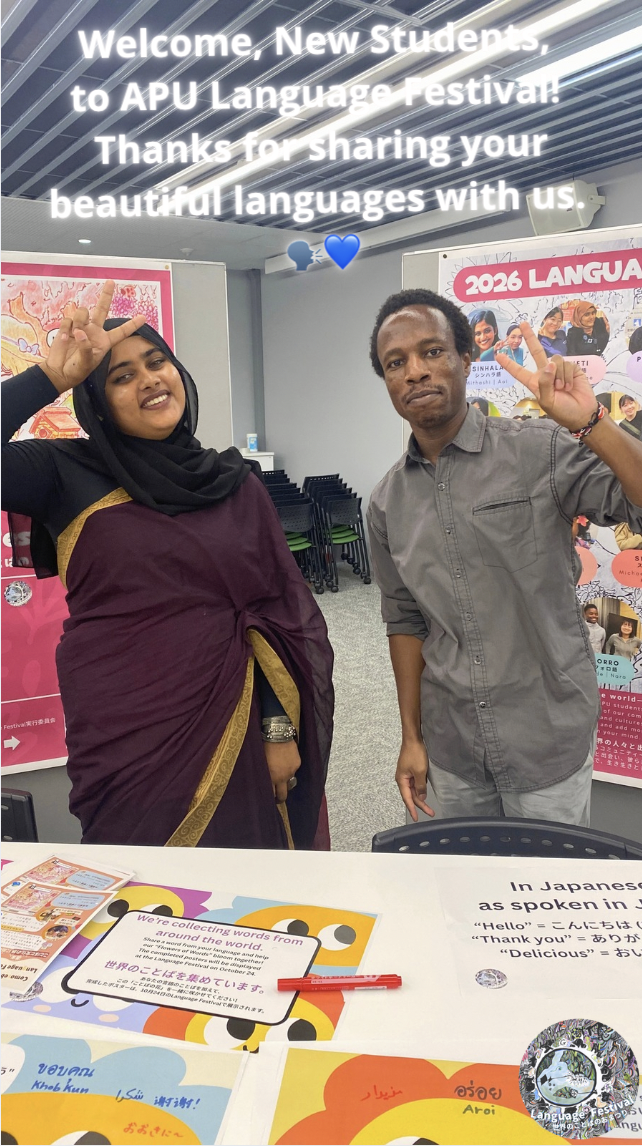
Coming back to campus after nearly a month and a half away on break, the sun was mighty, with a cool breeze soothing to my soul. Millennium Hall and the whole campus were filled with colors as students from different nations came together in their traditional outfits to showcase the rich diversity that is our university. Today was the Fall 2026 Entrance Ceremony.
APU was decking itself out in its best colors to welcome new, fresh minds, and so were we, the Language Festival team. We came prepared with our love for learning languages and, more importantly, our excitement to introduce them to our new students.
Our annual Language Festival is coming up, and this time, we are going to introduce 16 different niche languages from around the world, including Forro from São Tomé and Príncipe, the Sylheti dialect from Bangladesh, and many more. During the entrance ceremony, we set up a booth in J Building to introduce this wonderful celebration of multiculturalism to the new students.
Flyers, interactive activities, traditional clothing, and lots of enthusiasm filled our little corner of the campus.
As the ceremony at Millennium Hall ended, students slowly started making their way toward the booths, one by one. It was not a huge crowd in the beginning, but every student who stopped by brought a new story, a new language, and a new piece of culture with them.
They wore colorful traditional outfits, with smiles as big as their hearts.
We prepared an interactive activity where students could come to our booth and write simple words such as “Thank you,” “Hello,” and even “Delicious” in their own languages. What began as a simple activity soon became the heart of the conversation.
One of the first students to visit our booth was a Vietnamese student wearing a serene white Áo Dài. She not only taught us how to say “Hello” in Vietnamese, but also explained how Vietnam eventually adopted the Latin-based writing system used today instead of the Chinese characters that had previously been used. The history and the language flowed together.
We were also lucky to have Professor Khan join us and share his excitement about showcasing Urdu at the Language Festival. He showed us the differences between Urdu and Arabic writing.
Then came students from India, Mongolia, Bangladesh, Papua New Guinea, and many other countries. We even learned three different dialects from Indonesia alone. And it was not only the students who stopped by. Parents were carefully guiding students to share more about their mother tongues.
It was a reminder that language is passed through generations. It carries memories, tradition, and a sense of belonging.
By the end of the event, our papers were filled with greetings from different languages. There was not a single space left to write anything. It was not only the languages that made the day worthy; it was the enthusiasm and warmth.
It has been only a few days since they stepped into Japan. They were homesick, and this small activity was a way for us to make them feel like they belong here, with all their colors and beauty.
For us, the booth was not just about promoting the upcoming Language Festival. It was about creating a small space where people could proudly say, “This is my language. This is where I come from.
”The Language Festival is still ahead of us, but after meeting so many people today, experiencing the beauty of languages and diversity, we can barely wait.
As we speak, the hanabi is lighting up the sky as the hope for a new tomorrow rises in our hearts.
Entrance Ceremony Fall 2026
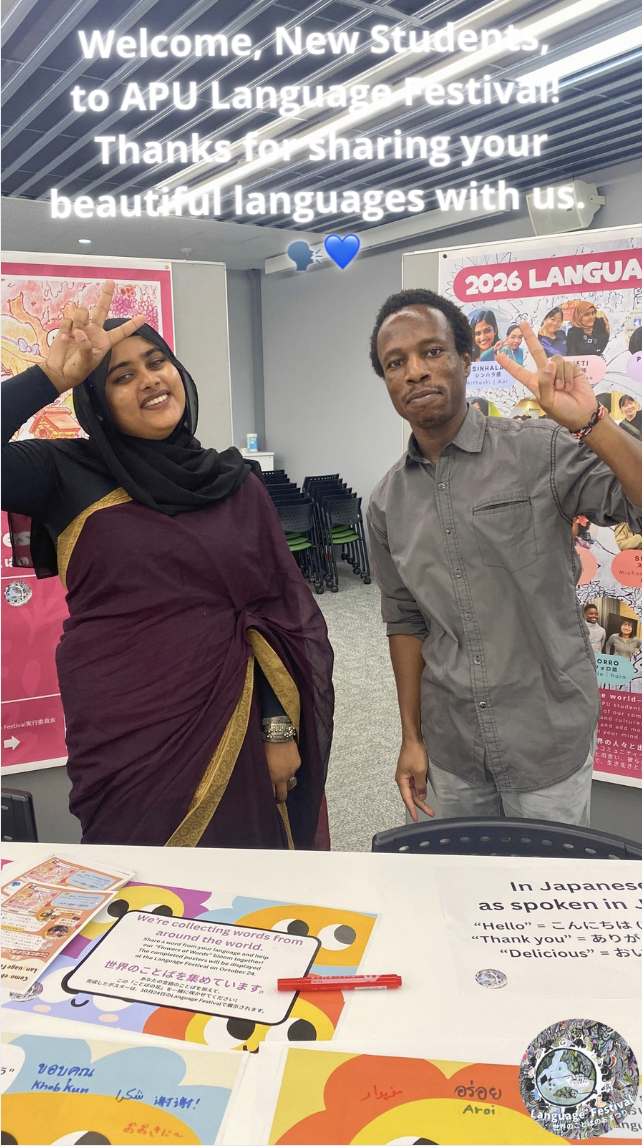
約1か月半の休みを終えてキャンパスに戻ってくると、太陽は力強く輝き、涼しい風が私の心を癒してくれていました。Millennium Hallとキャンパス全体は色とりどりに彩られ、さまざまな国から来た学生たちが伝統的な衣装を身にまとい、私たちの大学が持つ豊かな多様性を表現していました。今日はFall 2026 Entrance Ceremonyでした。
APUが新しく、フレッシュな学生たちを迎えるために最高の姿を整えていたように、私たちLanguage Festival teamも準備を整えていました。私たちは、言語を学ぶことへの愛情、そして何よりも、新しい学生たちに言語を紹介することへの期待を胸に、この日に臨みました。
私たちのannual Language Festivalが近づいています。そして今回は、São Tomé and PríncipeのForroや、BangladeshのSylheti dialectなど、世界各地の16の異なるニッチな言語を紹介する予定です。Entrance Ceremonyでは、新しい学生たちにこの素晴らしい多文化交流の祭典を紹介するため、J Buildingにブースを設置しました。
チラシ、参加型のアクティビティ、伝統衣装、そしてたくさんの熱意が、私たちのキャンパスの小さな一角をいっぱいにしていました。
Millennium Hallでの式典が終わると、学生たちは一人ずつ、ゆっくりとブースへ向かい始めました。最初は大きな人の集まりではありませんでしたが、立ち寄ってくれた一人ひとりの学生が、新しい物語、新しい言語、そして新しい文化の一片を持ってきてくれました。
彼らは色鮮やかな伝統衣装を身にまとい、心と同じくらい大きな笑顔を見せていました。
私たちは、学生たちがブースに来て、「Thank you」「Hello」、そして「Delicious」などの簡単な言葉を自分たちの言語で書くことができる参加型のアクティビティを用意しました。最初はシンプルなアクティビティだったものが、すぐに会話の中心になりました。
私たちのブースを訪れた最初の学生の一人は、穏やかな白いÁo Dàiを着たベトナム人の学生でした。彼女はベトナム語で「Hello」と言う方法を教えてくれただけでなく、ベトナムが、それまで使われていた漢字に代わって、現在使われているラテン文字を基にした文字体系をどのように採用するようになったのかについても説明してくれました。歴史と言語が一つにつながって流れていくようでした。
私たちはまた、Professor Khanが参加し、Language FestivalでUrduを紹介することへの熱意を共有してくださったことも嬉しく思いました。彼はウルドゥー語とアラビア語の文字の違いを見せてくれました。
その後、India、Mongolia、Bangladesh、Papua New Guinea、そしてその他多くの国から学生たちがやって来ました。Indonesiaだけでも、私たちは3つの異なる方言を学びました。そして、立ち寄ってくれたのは学生たちだけではありませんでした。保護者の方々も、学生たちに自分たちの母語についてもっと話すよう、そばで促していました。それは、言語が世代から世代へと受け継がれてきたものであることを思い出させてくれました。言語には、思い出、伝統、そして自分がどこに属しているのかという感覚が込められています。
イベントの終わりまでには、私たちの紙はさまざまな言語の挨拶でいっぱいになっていました。もう何かを書くためのスペースは一つも残っていませんでした。この日を特別なものにしたのは、言語だけではありませんでした。それは、そこにあった熱意と温かさでもありました。
彼らが日本に来てから、まだほんの数日しか経っていませんでした。彼らはホームシックを感じていました。この小さなアクティビティは、彼らがここに居場所があると感じてもらうための私たちなりの方法でした。彼らが持つ、それぞれの色と美しさをそのままに。
私たちにとって、ブースはUpcoming Language Festivalを宣伝するためだけのものではありませんでした。それは、人々が誇りを持って、「This is my language. This is where I come from.」と言える小さな場所をつくることでした。
Language Festivalはまだ私たちの前にあります。しかし、今日これほど多くの人々に出会い、言語と多様性の美しさを経験した今、私たちはその日が待ちきれません。
今、花火が空を照らしています。そして、新しい明日への希望が私たちの心の中に広がっています。